Crafting FORMS: Balancing Tradition and Technology in Craft Practices -
FORMS AND FUNCTION
Across the Gulf region, the oasis has long represented survival, continuity, and collective growth. Surrounded by arid landscapes, it is a site where water, palm trees, and human settlement coexist in delicate balance. The geometry of the oasis—its circular ground, rising trunk, and protective canopy—becomes both ecological system and cultural symbol.
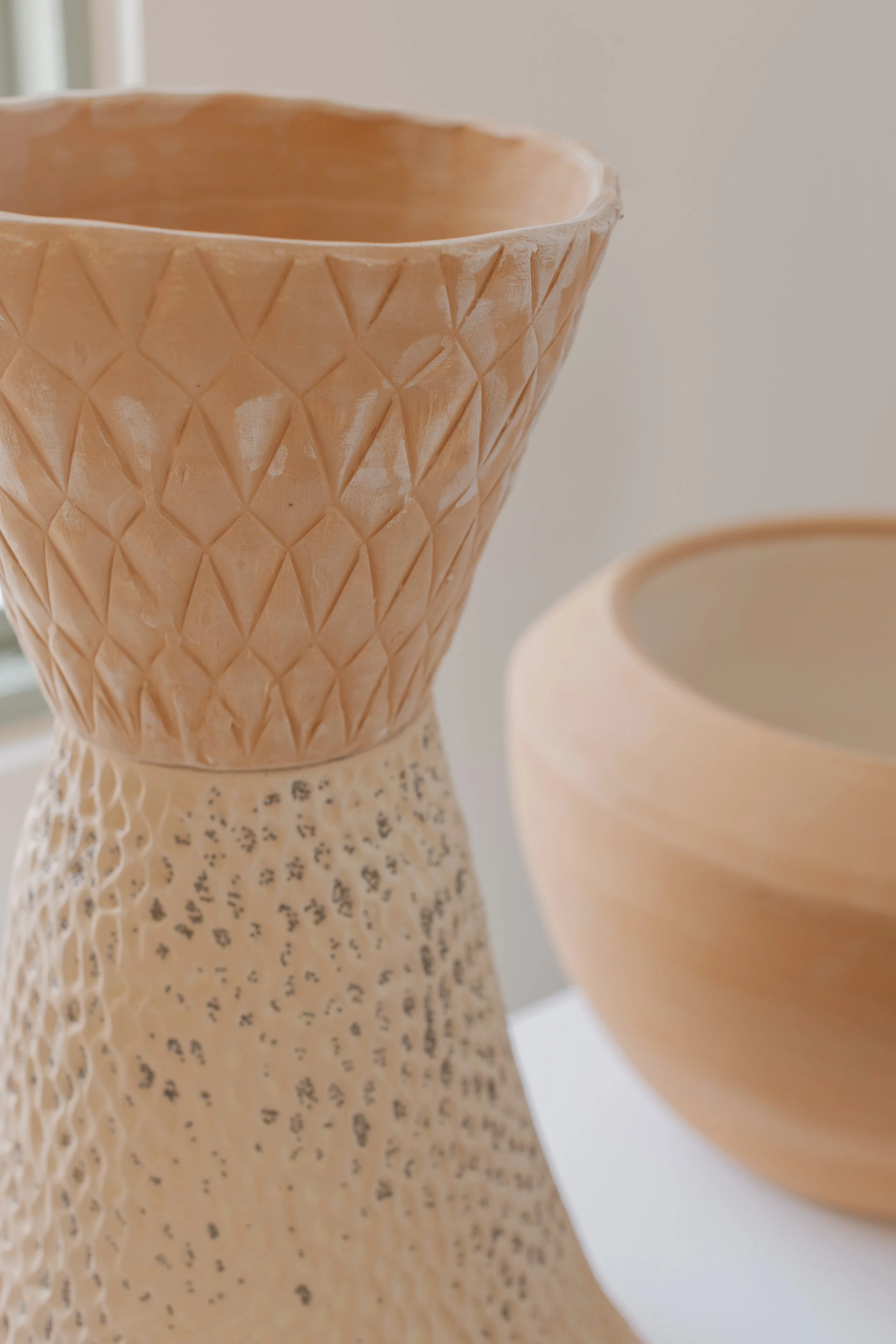
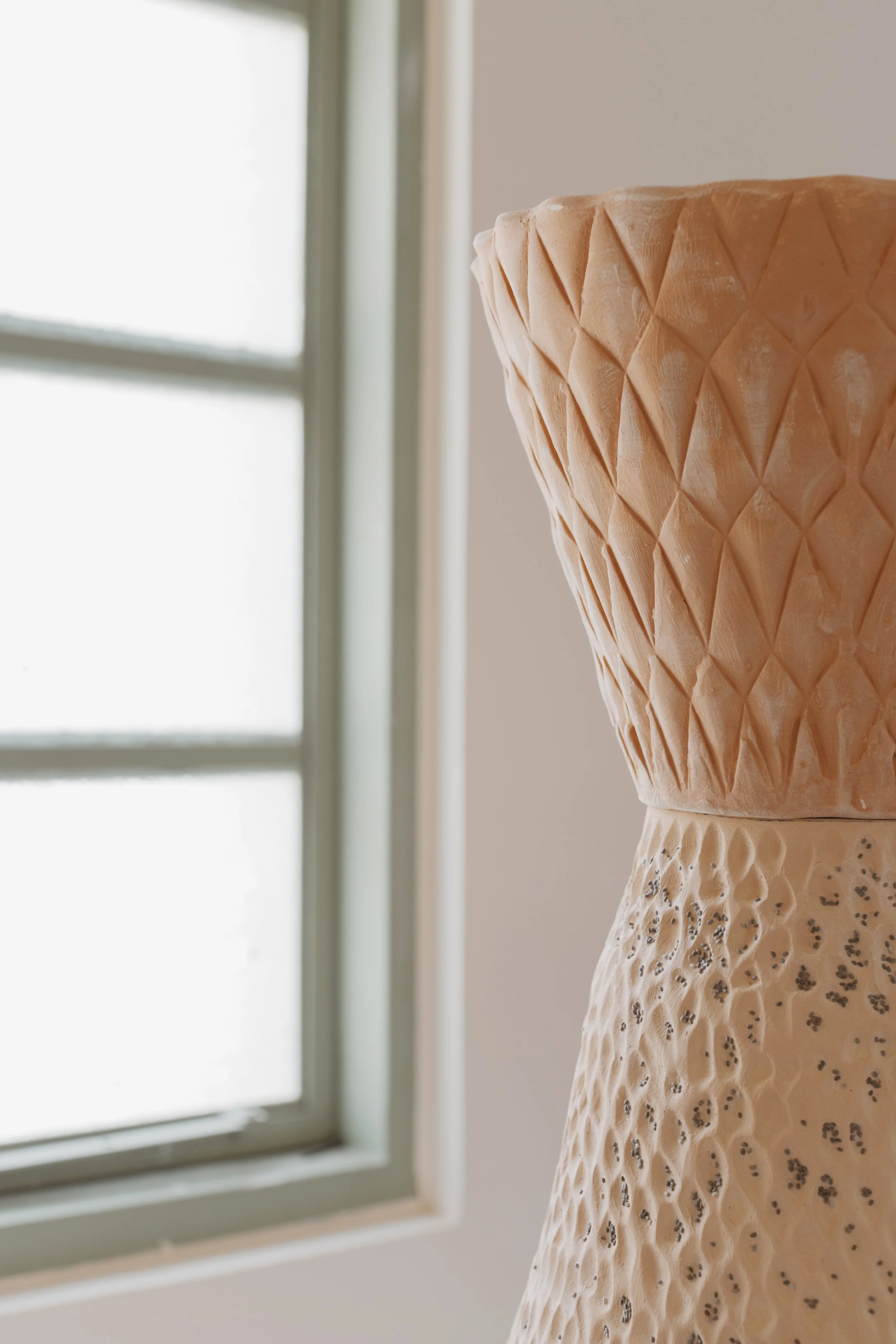
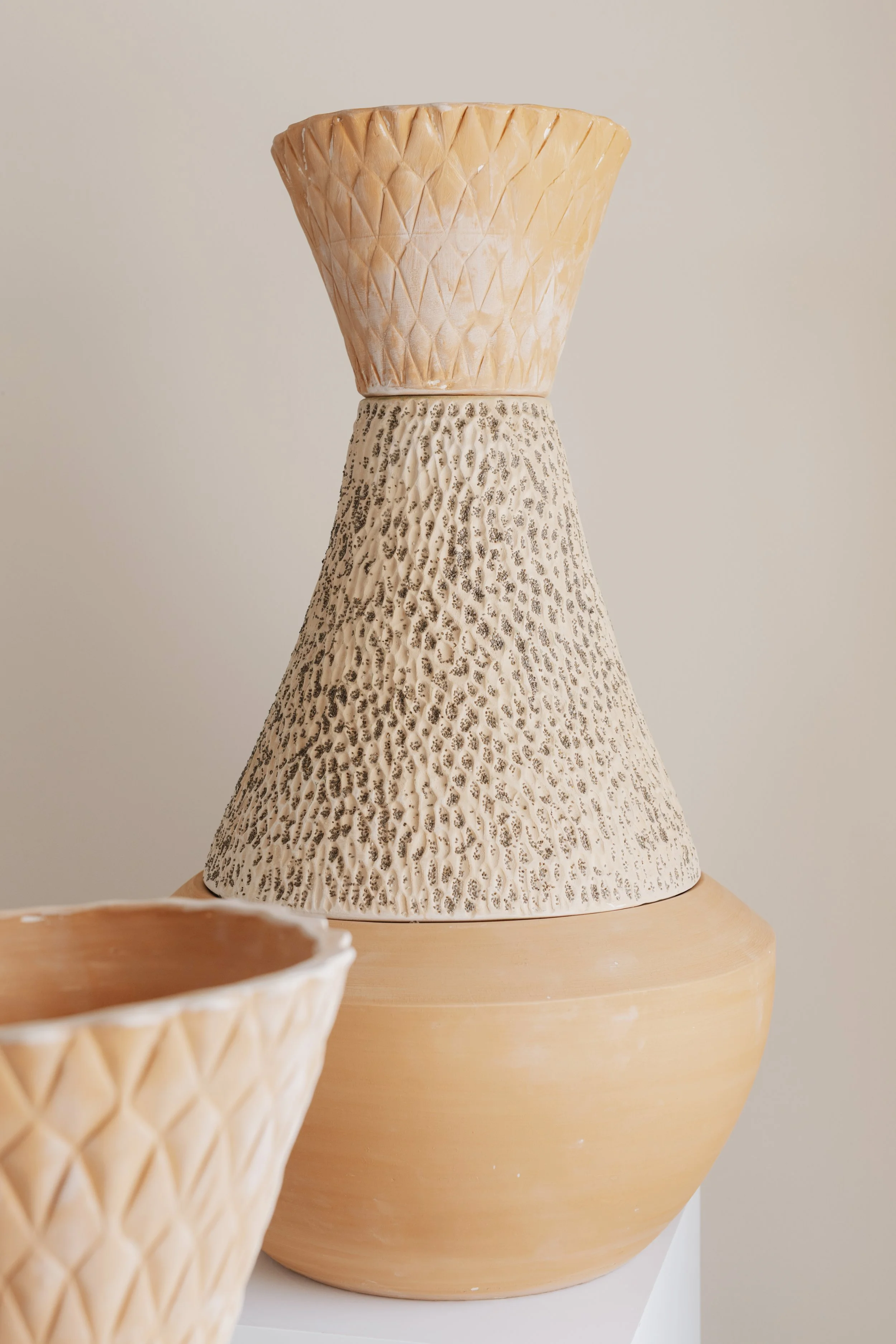
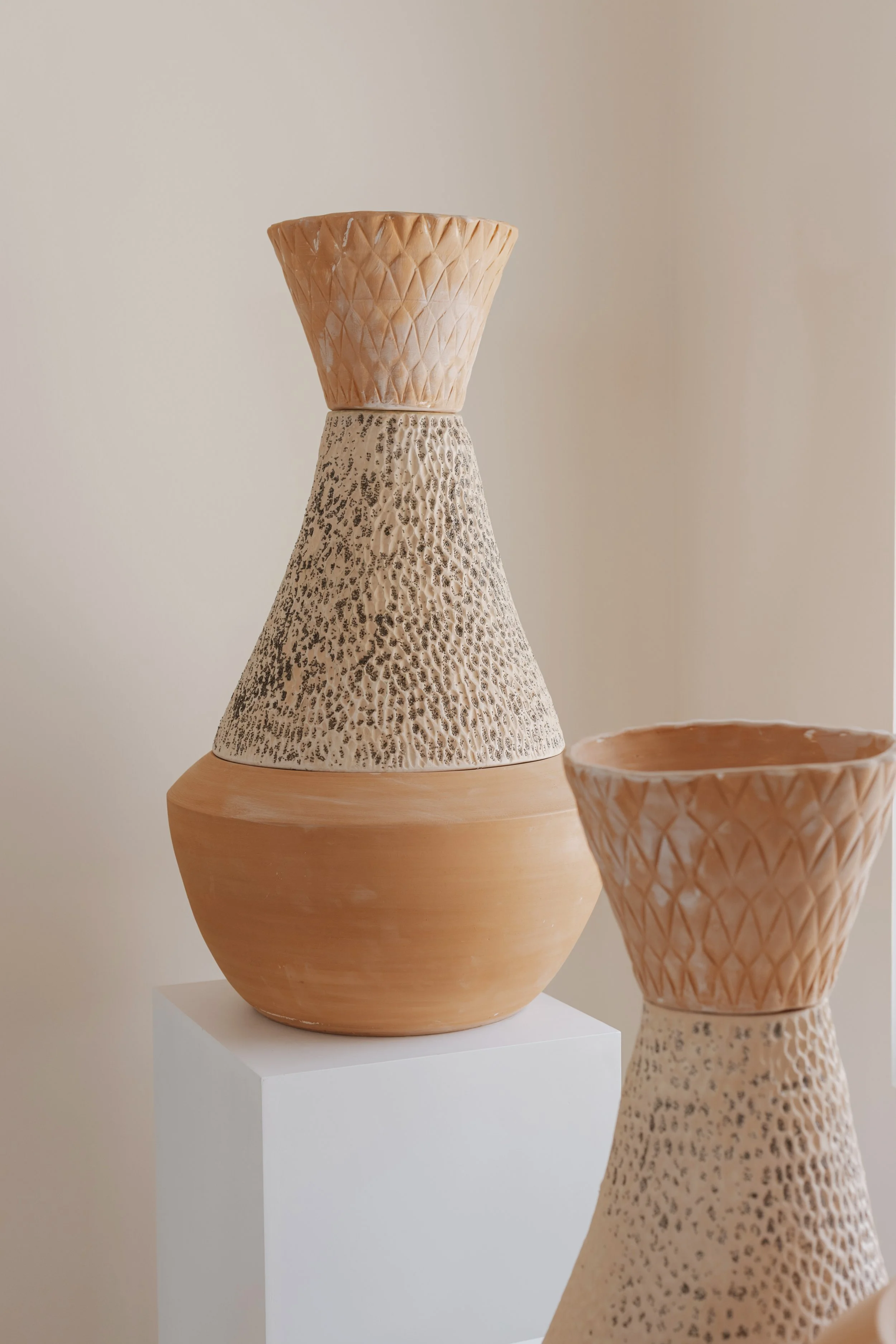
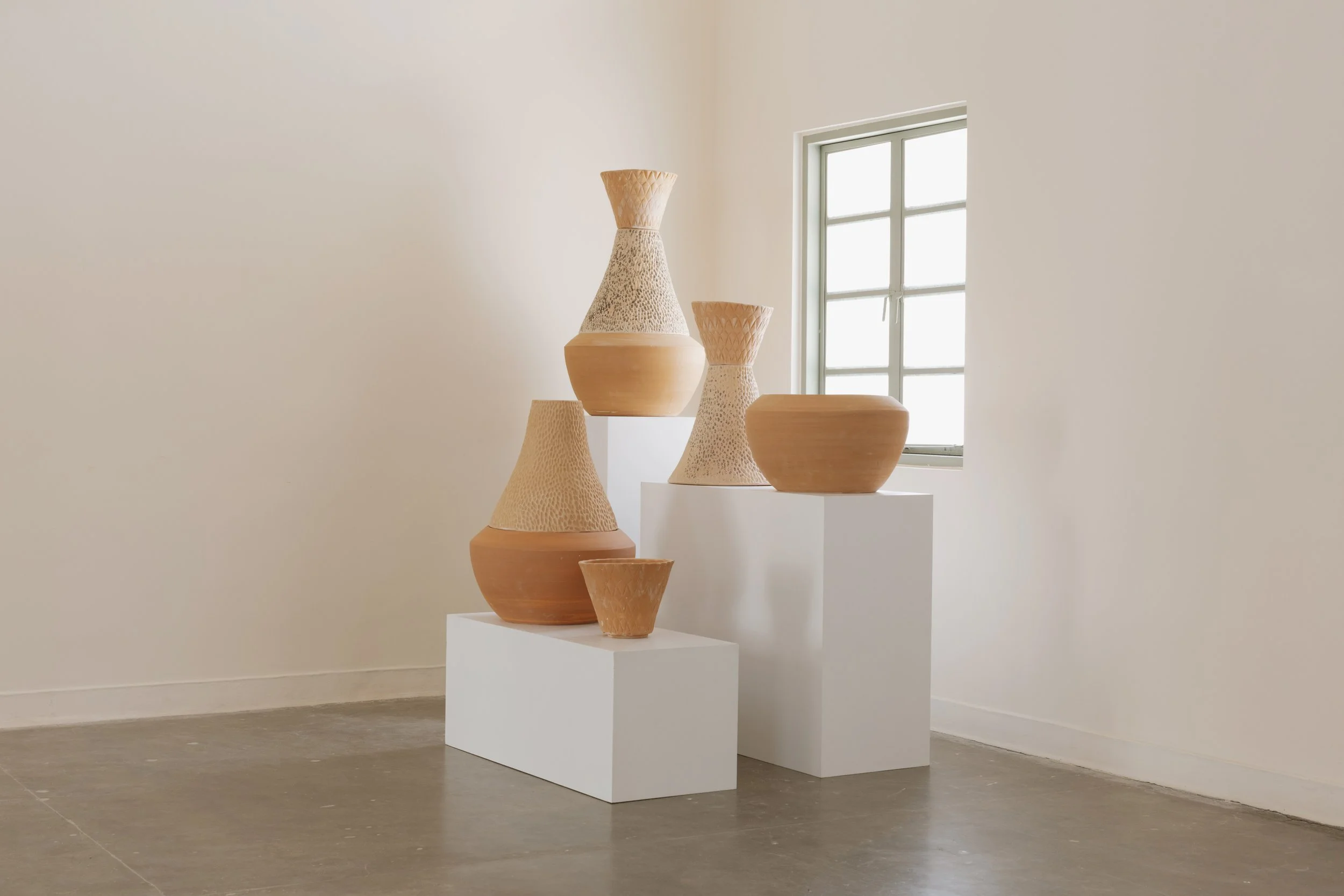
This project is a stackable, three-part water system inspired by that geometry. The circular and elliptical form represents water and ground; the triangular form references palm leaves and filtration; and the rectangular form evokes the palm trunk and vertical growth. Each geometric structure becomes a vessel. When stacked, they recreate the ecological logic of an oasis—circulation, filtration, and regeneration—while demonstrating a dialogue between traditional craft and contemporary fabrication technologies.
All vessels hold water, yet each plays a distinct role within the cycle. Together, they operate as an interconnected system; individually, they function as autonomous objects.
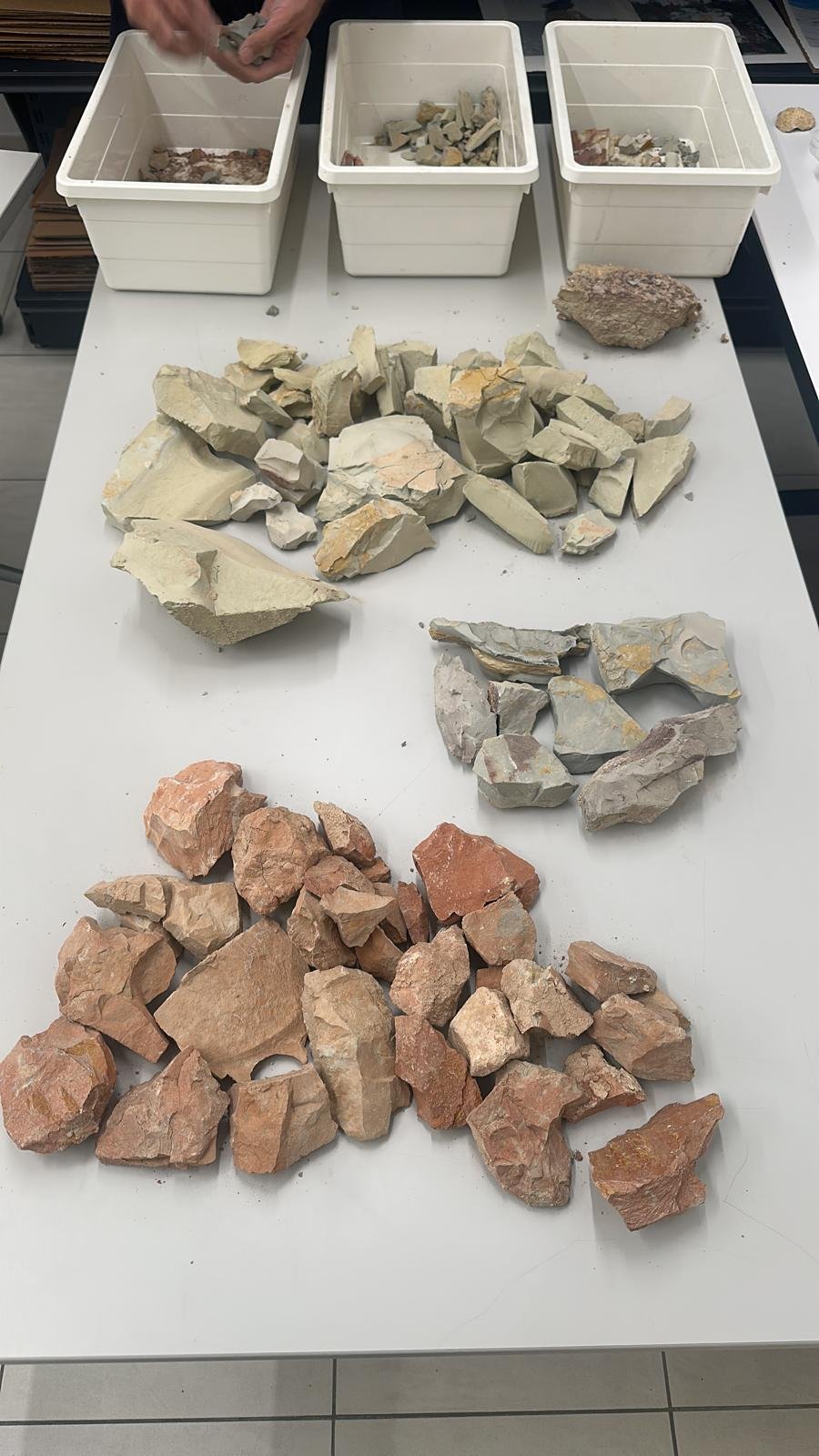
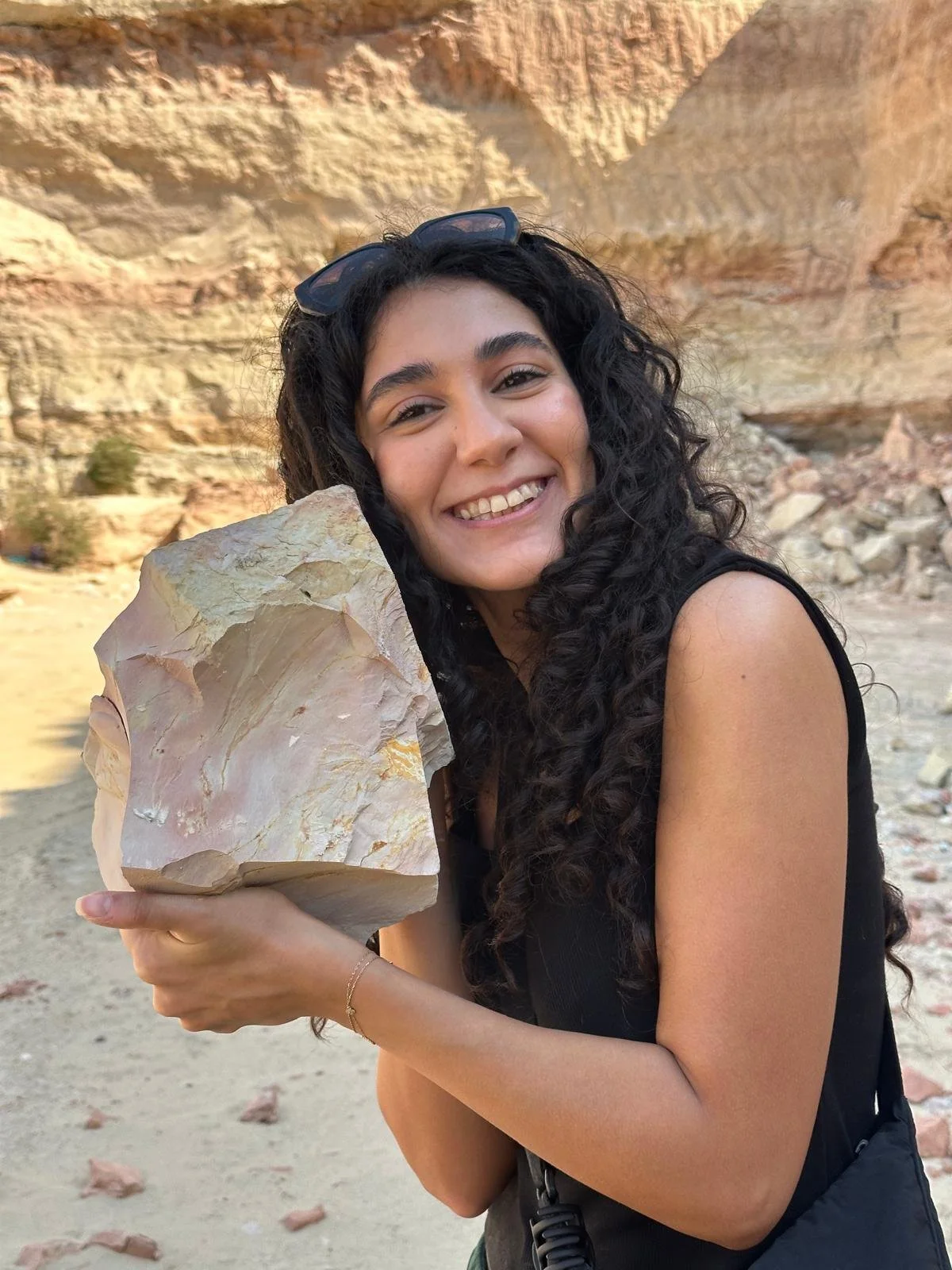
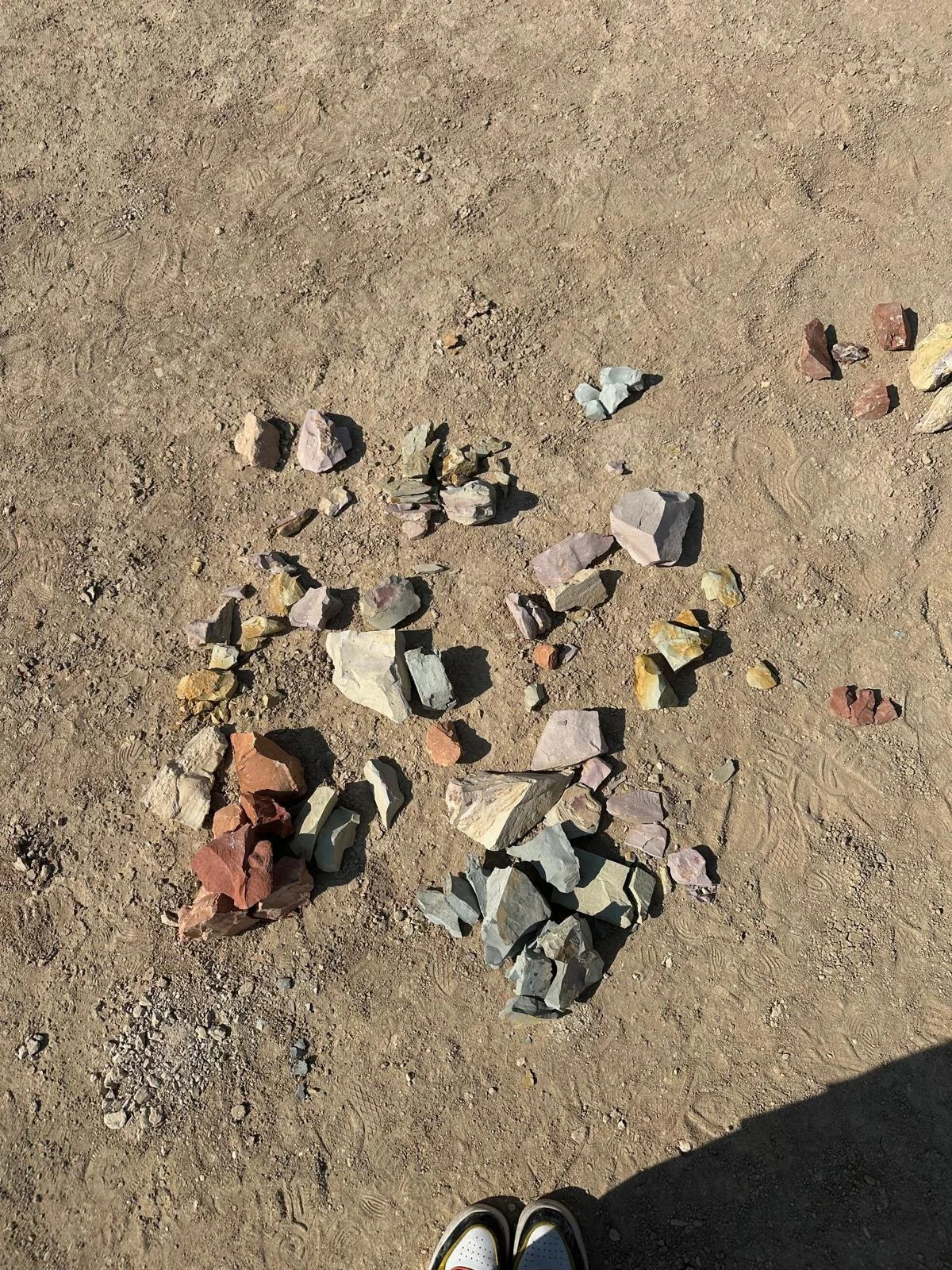
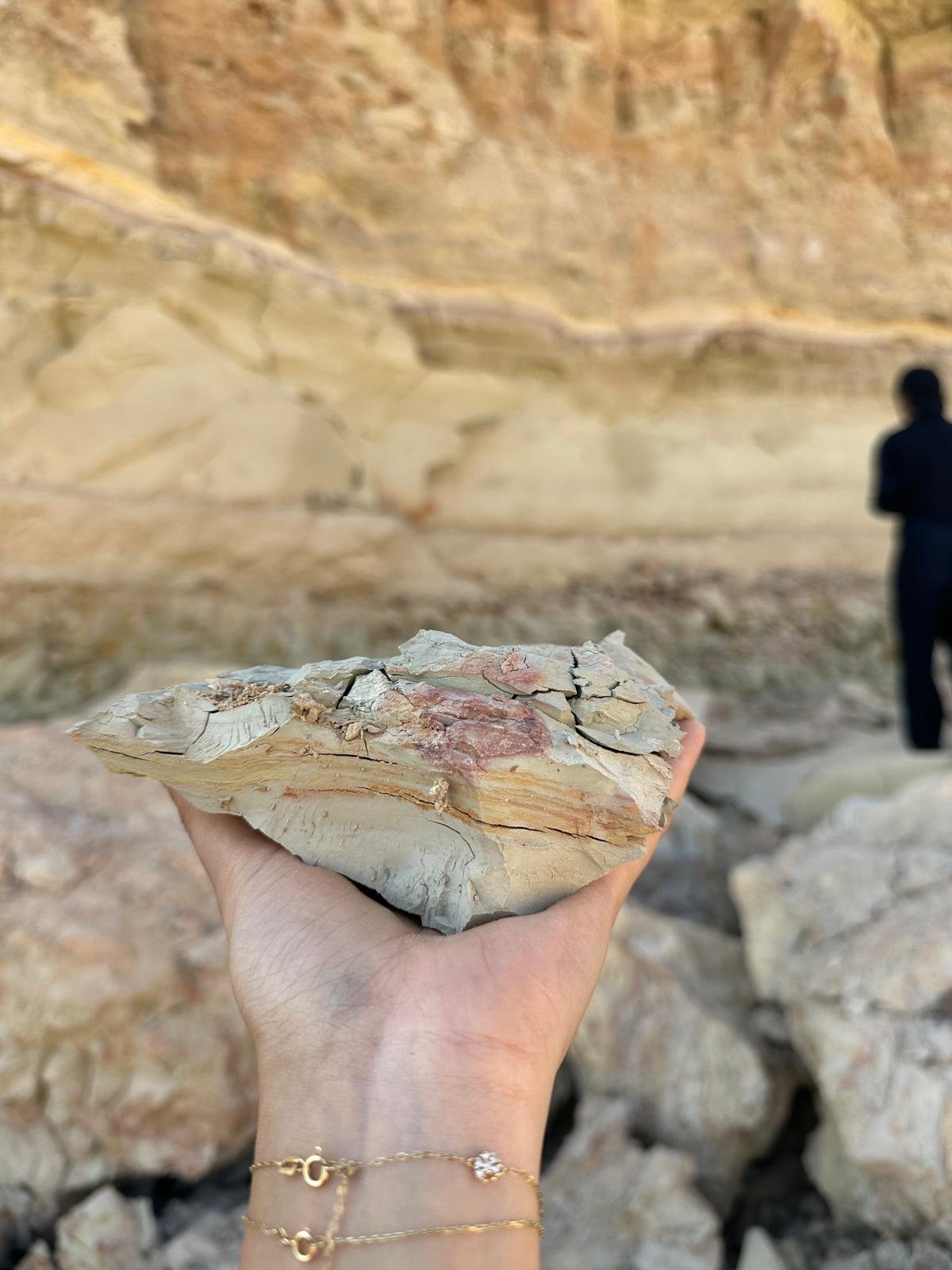
The pieces are made from wild clay sourced from Umbab, shaped through three fabrication methods: wheel throwing, hand building, and slip casting using a plaster mold. Each process requires a different clay consistency, revealing how wild clay adapts across time and across tools while maintaining its material identity.
By bringing these methods together, the work reflects on how tradition and technology can coexist, informing and extending one another through material practice.